
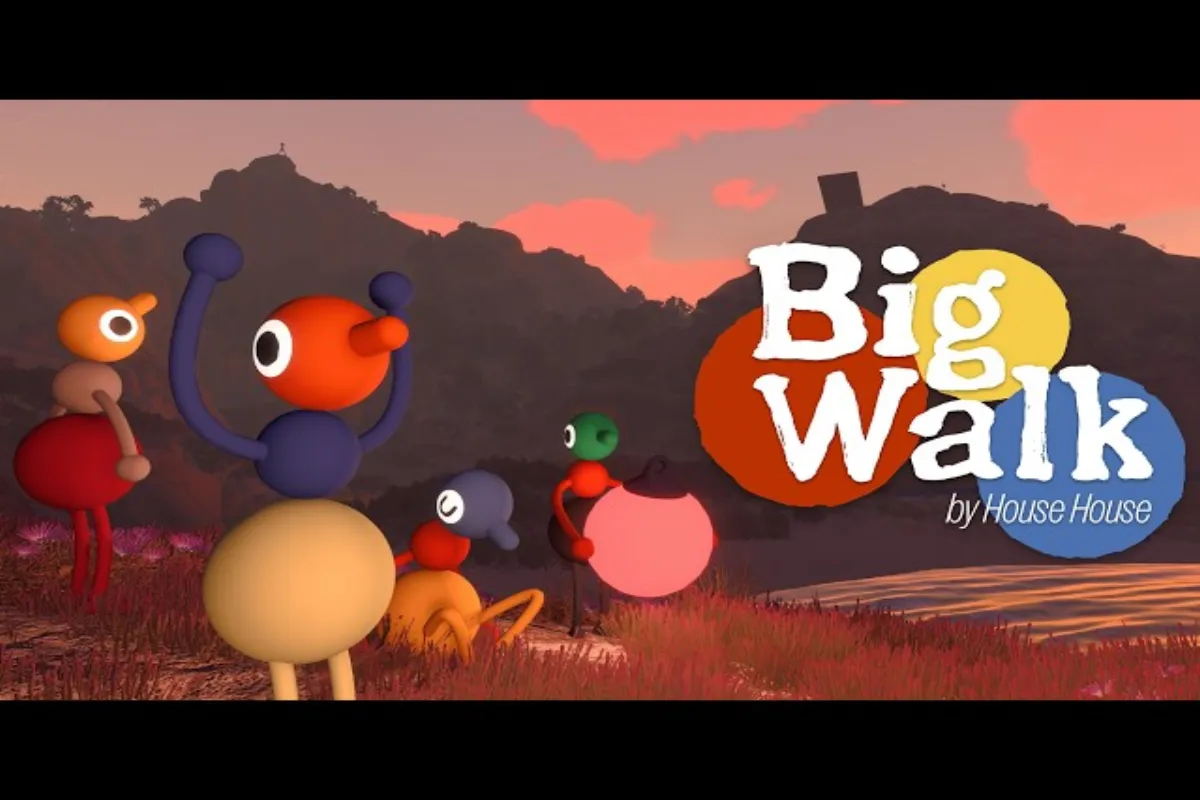
Spanning roughly six years from initial pitch to worldwide release, the Big Walk development timeline is one of the more deliberate creative arcs in recent indie memory. The Melbourne-based team behind it spent two full years in private experimentation, survived an internal pivot, and emerged at The Game Awards in December 2023 with a project that would finally launch on August 4, 2026.
For anyone tracking the studio, the soundtrack, or the broader open-world cooperative experience, the road from concept to shipping build is unusually well documented — partly because the creators chose to share it publicly in interviews and partly because players have been watching the project since its 2020 reveal teaser.
Big Walk Development Timeline at a Glance
The full Big Walk development timeline can be broken into five distinct phases, each with a different creative focus. Below is a compact reference covering every confirmed milestone, from the earliest concept pitch to platform rollout. Dates are drawn from the official presskit, the Wikipedia entry, and the developers' own retrospective published in GamesIndustry.biz.
| Year | Phase | Key Milestone |
|---|---|---|
| 2020 | Concept | Initial pitch and prototype work began at House House |
| 2021–2022 | Experimentation | Two-year exploration of core mechanics, traversal, and tone |
| 2023 (Dec) | Reveal | Officially announced at The Game Awards |
| 2026 (Feb) | First platform | PlayStation 5 launch window opens |
| 2026 (Jun) | Second platform | Nintendo Switch 2 release |
| 2026 (Aug 4) | Worldwide release | Full multi-platform launch |
The two-year experimentation block is the most important phase to understand, because almost every design decision in the shipped game — including the cooperative walking loop, the diegetic audio system, and the open-world structure — was forged during that silent period. The studio has noted that 200 hours of structured playtesting occurred during experimentation, which is unusually high for a project of this size and partly explains the polished feel of the launch build.
From 2020 Concept to The Game Awards Reveal
2020: The Original Concept
The project started in early 2020 as a small internal prototype at House House, the Melbourne studio previously known for the Untitled Goose Game. According to the creators' six-year retrospective, the very first build was a stripped-down cooperative walking simulator with a single shared camera and no combat systems. The goal at the time was simple: build something that rewarded conversation between two players.
The concept evolved quickly during the pandemic-era remote work setup. Because the team could not meet in person, they leaned harder into asynchronous design notes and shipped internal builds to each other weekly. The result was a culture of rapid iteration that shaped the entire Big Walk development timeline.
Two Years of Experimentation
The 2021–2022 stretch is often described by the team as a "long quiet middle." Publicly, the project appeared dormant; internally, the studio was rebuilding the prototype from scratch at least three times. The experimentation phase focused on three pillars:
-
Traversal feel — tuning the walking, climbing, and resting animations to feel relaxing rather than sluggish.
-
Conversation tools — designing the communication-tools system that lets players point, signal, and share without voice chat.
-
World density — filling the open world with enough incidental detail that players feel rewarded for wandering off the main path.
By the end of 2022, the project had a clear creative identity but no publisher commitment. The Game Awards pitch, prepared in late 2023, was built almost entirely from internal footage.
December 2023: The Game Awards Reveal
The official reveal trailer dropped during The Game Awards ceremony in December 2023, marking the public start of the Big Walk development timeline in the eyes of most players. Reaction was strong in indie circles, partly because the studio's previous work had cultivated a specific audience, and partly because the cooperative walking premise felt genuinely fresh. Within 48 hours of the trailer, the studio confirmed a multi-platform release intent, though exact platform timing would not lock in for another two years.
The reveal also gave the audio team the first opportunity to discuss the diegetic music direction publicly. Players immediately picked up on the fact that the trailer's soundtrack was not a standard orchestral score but something more environmental — a tease of the final Big Walk soundtrack design that would not be fully explained until 2026.
Production Years, Playtesting, and Platform Lock-In
The production years between reveal and launch were the most publicly visible stretch of the Big Walk development timeline, but also the most iterative. The studio committed to roughly 200 hours of structured playtesting with external volunteers, plus another open beta wave in late 2025 that informed several balance changes.
Platform announcements trickled out over 2024 and 2025. By the time the release date locked in, three platforms were confirmed. The full schedule, as listed in the Wikipedia development history entry, looks like this:
| Platform | Release Window | Region Notes |
|---|---|---|
| PlayStation 5 | February 2026 | Console-first launch window |
| Nintendo Switch 2 | June 2026 | Coincided with the Switch 2 mid-year slate |
| PC + additional consoles | August 4, 2026 | Worldwide simultaneous release |
The staggered platform schedule was a deliberate choice, partly because the studio wanted each build to feel native to its hardware rather than ported. The Switch 2 version in particular required bespoke optimization work, and several design tweaks — including a slightly toned-down foliage density — were made specifically to keep the frame rate stable in handheld mode.
The full retrospective from the studio, published in GamesIndustry.biz, describes this period as the most stressful of the entire development cycle. External playtest feedback led to major changes in how the world spawns ambient encounters, how the proximity-voice-chat system handles large groups, and how the Big Walk soundtrack layers itself during long sessions.
The Big Walk Soundtrack and Diegetic Music System
The Big Walk soundtrack is one of the most distinctive design choices in the entire project. Rather than using a standard score that plays over the action, the audio team built a diegetic music system — meaning the music exists inside the world at specific locations, played by in-game instruments or environmental sources, rather than as background audio. Players who walk past a campfire, a hilltop radio, or a riverside jam session will hear the music as part of the scene itself.
The Diegetic Music System Explained
Diegetic audio is not a new idea in games, but the studio applied it with unusual commitment. The Big Walk soundtrack does not include a permanent underlying score; if a player walks through a quiet area with no music sources nearby, they will hear only ambient noise, footsteps, wind, and wildlife. Music appears only when the world provides it.
According to the official presskit, this design choice was driven by two factors:
-
It encourages players to explore actively, because music is a reward for moving through specific places.
-
It preserves quiet moments for conversation between co-op partners, which is core to the game's identity.
Players who want a continuous soundtrack can still get one, but only by seeking out the right locations. The audio team has confirmed that some late-game areas layer multiple diegetic sources, creating a soft composite score that feels almost orchestral without ever violating the world's internal logic.
Meet the Composers
The Big Walk soundtrack credits, as listed on the official presskit, name three primary composers and a dedicated sound designer. The full team is as follows:
| Role | Name | Contribution |
|---|---|---|
| Composer | AKSFX | Lead ambient tracks and location-based music cues |
| Composer | Sam Gill | Folk-influenced pieces and campfire jam sessions |
| Composer | Luke Neher | Experimental electronic textures and late-game motifs |
| Sound Design | Em Halberstadt | World ambience, footsteps, and diegetic source placement |
The collaborative structure is worth noting. Rather than hiring a single lead composer to write a unified score, the studio brought in three artists with very different styles and let the world's geography dictate which style appears where. The result is a soundtrack that feels curated by the world itself, which fits the diegetic philosophy perfectly.
Players who want to support the composers directly can find their work on Bandcamp and Spotify; the studio has confirmed that a standalone release of the Big Walk soundtrack is planned for late 2026, after the launch window settles.
House House and the Melbourne Studio Behind Big Walk
No Big Walk development timeline is complete without acknowledging the studio that built it. House House is a small Melbourne-based team, and Big Walk is their most ambitious project by a wide margin. The studio is known for a particular design philosophy that values restraint, environmental storytelling, and player-driven humor over scripted set-pieces.
For a deeper look at the studio's broader history and the people behind the project, the House House history guide covers the team's earlier work in detail. The Melbourne studio profile also documents how the city’s indie scene shaped the project’s tone.
Design Philosophy and Restraint
Several recurring design principles showed up across the Big Walk development timeline, and they help explain why the finished product feels so polished despite the long gestation:
-
Player-led pacing — no forced objectives, no quest log pressure, and no failure state.
-
Conversation as core gameplay — every system is built around making two-player chat easier, not harder.
-
Quiet spaces — large portions of the world have no music, no encounters, and no scripted events, because the studio believes players need room to think.
-
Diegetic everything — audio, navigation hints, and even progression cues are placed inside the world rather than layered on top of it.
These principles were not all present in the 2020 concept. The quiet-spaces decision in particular emerged only after playtesters reported feeling rushed by ambient music in early builds, which is one of the most important lessons from the experimentation phase.
Big Walk Release Day and What Comes Next
Big Walk launched worldwide on August 4, 2026, capping a six-year creative arc that began with a small internal prototype in 2020. The launch build includes all three platform versions, full crossplay support, and the complete Big Walk soundtrack as experienced through the world itself.
The studio has hinted at post-launch content, including a possible New Game+ mode that layers new diegetic music sources into the world, and a co-op-only challenge mode that uses specific soundtrack cues as soft timers. Neither feature has been dated publicly, but both were referenced in interviews around the launch window.
For readers who want to keep tracking how the project evolves, the Big Walk development story covers the human side of the six-year journey, while the Big Walk six-year development retrospective offers a more technical breakdown of the production phases.
Which part of the Big Walk development timeline surprised you the most — the two-year silent experimentation block, the diegetic music system, or the staggered platform rollout? Drop a comment and let us know.
Frequently Asked Questions
Q: Can I play Big Walk solo without other players?
While Big Walk is designed as a cooperative experience, you can explore the world solo. However, certain puzzles and areas require at least two players to complete, so solo walkers will find some content gated behind multiplayer requirements in the current version of the game.
When did the Big Walk development timeline officially begin?
The Big Walk development timeline began in early 2020 with the first internal prototype at House House, though the project did not go public until The Game Awards reveal in December 2023. According to the studio's retrospective, the concept predates the pandemic-era work-from-home shift by only a few months.
Who composed the Big Walk soundtrack?
The Big Walk soundtrack was composed by AKSFX, Sam Gill, and Luke Neher, with sound design by Em Halberstadt. The team's credits are listed in full on the official presskit, and a standalone soundtrack release is planned for later in 2026.
Why does the Big Walk soundtrack use a diegetic music system?
The studio designed the Big Walk soundtrack to play only from in-world sources — such as a campfire, a radio, or a riverside jam session — rather than as a background score. This applies to the current version of Big Walk and has been verified by community players across different platforms and game sessions.
Which platforms is Big Walk available on at launch?
Big Walk launched on PlayStation 5, Nintendo Switch 2, and PC on August 4, 2026. The Switch 2 version required bespoke optimization work, and the PS5 build arrived roughly six months earlier in February 2026. Crossplay is supported across all three platforms, as confirmed in the Wikipedia development history entry.