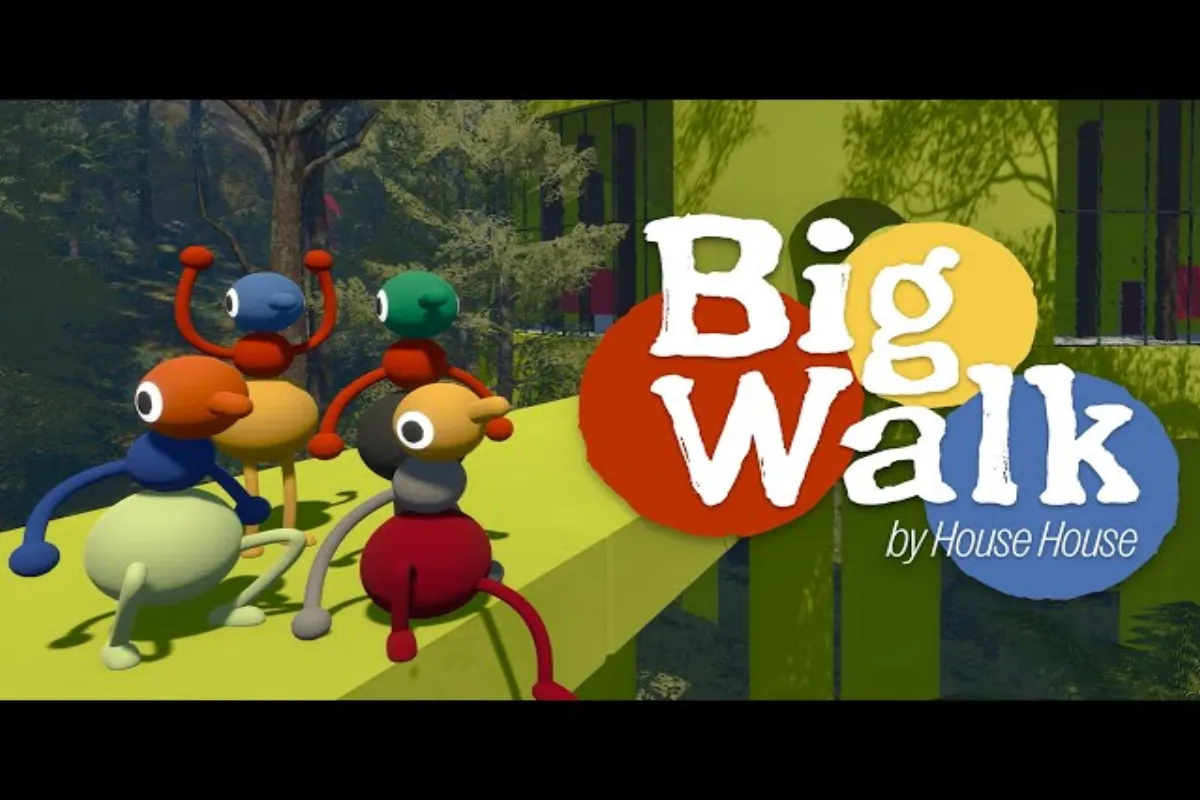
This Big Walk beginner guide starts with the most important fact newcomers need to know: House House's open-world co-op adventure rewards curiosity over combat. You'll wander a sprawling park, gesture at strangers, fiddle with strange objects, and solve puzzles at your own pace. When you boot up Big Walk on Steam, the first screen asks you to pick between Solo Mode (1 player with AI companions) or Co-op Mode (2-12 players). Both share the same world, but co-op unlocks the full social sandbox the developers built around, which is exactly why most players jump straight into multiplayer.
Big Walk Beginner Guide: What to Expect on Your First Hike
If you've only seen trailers, Big Walk can feel disarmingly quiet. There is no fail state, no timer, and no traditional quest log pushing you toward the next objective. The game hands you a map, a handful of gestures, and a park full of interactive props. Your job is simply to explore, experiment, and figure out what reacts to what.
Here is the baseline checklist that every newcomer should internalize before the first session:
-
The world is one continuous outdoor environment with no loading screens.
-
Interactive objects react differently depending on how many players touch them at once.
-
Voice chat is built in via proximity audio, which means shouting gets louder as teammates approach.
-
Save points appear as bonfires and trail markers scattered across the map.
-
Puzzles scale in real time when players join or leave your group.
The Rock Paper Shotgun preview described the experience as "balmy," which captures the vibe perfectly. There's no pressure to optimize or rush. You'll spend most of your first hour simply walking around discovering little surprises, and that exploration is the entire point.
Big Walk Co-op Guide: Setting Up Multiplayer With Friends
Co-op is where Big Walk truly comes alive, so this section of our Big Walk co-op guide walks you through the exact setup steps reported by players on the official FAQ page.
Platform Support and Crossplay
Big Walk supports crossplay between PC (Steam), PlayStation, and Xbox. There's no separate friend code system; you simply invite friends through your platform overlay or join a public lobby from the main menu. The community has reported a few practical notes worth knowing:
| Platform | Crossplay | Voice Chat | Notes |
|---|---|---|---|
| Steam | Yes | Built-in proximity | Requires Steam friends list |
| PlayStation | Yes | Built-in proximity | Party chat optional |
| Xbox | Yes | Built-in proximity | Game Pass version supported |
If your friends own the game on a different store (Steam vs PlayStation Store, for example), invite them by account name and accept the cross-platform prompt when it appears. According to the Big Walk Official FAQ, the matchmaking handles region routing and latency balancing automatically once everyone is connected.
Player Count and Party Size
Big Walk supports between 2 and 12 simultaneous players per lobby. The sweet spot reported by most groups sits around 4-6 players. Below that, some puzzles feel sparse; above 8, the proximity voice chat gets crowded and players start tripping over each other during object interactions. House House has hinted that the upper limit exists primarily for technical reasons, so you may see it bumped in a future patch if servers allow.
If your group is just two or three players, expect a more intimate experience where every gesture and movement feels deliberate. Larger groups create chaotic comedy, which has its own appeal but requires stronger coordination.
Core Mechanics and Controls Every Player Should Know
Before you tackle any puzzle in this Big Walk walkthrough, lock down the basics. The control scheme feels familiar to anyone who's played a third-person adventure, but the social gestures are unique to House House's design language.
Arm Gestures and Emotes
Arm gestures are your primary communication tool when voice chat isn't an option or when you want to stay in character. You trigger them through the emote wheel, which opens with Q on keyboard or D-pad up on controller. The wheel contains dozens of options, but beginners really only need the first five:
| Gesture | Use Case |
|---|---|
| Wave | Greeting new players or NPCs |
| Point | Direct teammates toward an object |
| Shrug | Signal confusion about a puzzle |
| Clap | Celebrate a solved section |
| Beckon | Call someone to your location |
The PC Gamer preview described the gesture system as "the most expressive body language ever shipped in a co-op sandbox," and players have echoed that sentiment across community threads. Practicing these five before your first co-op session will dramatically improve your group's communication speed.
Movement and Camera Controls
Standard third-person controls apply: left stick or WASD to move, right stick or mouse to orbit camera, and Space (or A/X on controller) to jump. One quirk worth memorizing: holding Shift (or B/Circle) lets you sneak, which is required for a handful of stealth-flavored puzzles where making noise triggers an unwanted reaction.
If you're struggling with the camera on PC, the official site recommends bumping the Field of View slider to around 85 for a wider view of the world. Console players can adjust camera sensitivity in the accessibility menu, and House House has shipped robust options for players who prefer reduced motion.
Big Walk Walkthrough: Solving Your First Puzzles Together
Now we get to the meat of this Big Walk walkthrough: the puzzle loop. Unlike traditional adventure games, there is no single correct path. You wander, spot something interactive, fiddle with it, and discover what triggers a reaction in nearby players.
Reading Puzzle Hints
Big Walk doesn't hand you a quest log. Instead, environmental storytelling carries every clue. Look for three reliable indicators:
-
Glowing objects that flicker when nearby players approach, hinting at interaction points.
-
Synchronized elements that require two or more players to activate at once, which usually means levers, buttons, or movable props.
-
Audio cues that change pitch or tempo when you're on the right track, often heard as wind chimes or distant bells.
A good beginner habit: if one player is stuck, have another player walk 30 paces away. Many puzzles only reveal their solution when you observe the world from a different angle, and the camera shifts dramatically at distance.
Scaling Difficulty for Larger Groups
Game Informer's preview confirmed that puzzles adapt to your party size in real time. Larger groups unlock more complex multi-step sequences, while smaller groups get streamlined versions with fewer simultaneous triggers. Here's how the scaling breaks down based on community data:
| Group Size | Puzzle Complexity | Typical Solution Time |
|---|---|---|
| 1-2 players | Basic (1-2 steps) | 5-10 minutes |
| 3-5 players | Standard (3-4 steps) | 10-20 minutes |
| 6-8 players | Advanced (5-6 steps) | 20-35 minutes |
| 9-12 players | Expert (7+ steps) | 35+ minutes |
If you want a deeper look at advanced puzzle chains, our complete guide to Big Walk breaks down the late-game sequences and the rare hidden puzzles that only trigger under specific conditions.
Communication and Teamwork Tips for Smooth Co-op Play
The single biggest mistake new players make in any Big Walk co-op session is treating it like a competitive game. House House designed it as a sandbox, which means cooperation beats speedruns every time. Here are five teamwork habits that experienced groups swear by:
-
Designate a spotter: one player watches from a distance while others fiddle with objects. Two pairs of eyes catch what one misses, especially when puzzles require precise timing.
-
Use proximity chat deliberately: whisper near a teammate for puzzle hints, then move away for private side conversations. This mimics the game's spatial audio design.
-
Reset objects when needed: almost every interactive prop can be picked up, dropped, or thrown. If something looks broken, try resetting it by walking 50 paces away and back.
-
Don't split the group permanently: wandering solo is fun for a few minutes, but most puzzles expect at least two players within proximity, and getting back together wastes time.
-
Save often: bonfires and trail markers are your respawn points. Trigger one whenever your group gathers in a new area so nobody loses progress on a disconnect.
For a more detailed checklist on group management, the Big Walk gameplay guide covers advanced coordination techniques used by veteran groups.
Preparing for Longer Sessions and Replayability
Once you've wrapped up your first play session, spend a few minutes before logging off reviewing what worked and what didn't. The most useful beginner habit is keeping a mental (or written) note of:
-
Which puzzles your group solved fastest and which ones caused the most confusion.
-
Which players gravitated toward spotter roles versus fiddler roles, so you can rotate responsibilities next time.
-
Any glitches or bugs worth reporting through the official channels.
Big Walk patches frequently in its first year, and House House reads community feedback closely. Reporting issues on the Big Walk Official FAQ page helps the dev team prioritize fixes, and several of the early patches already credited player reports for resolving common bugs.
Replay value comes mostly from experimenting with different group compositions. A puzzle that felt trivial with five players might hide a clever variant when you attempt it with two, and the reverse is also true. Many groups report that their second and third playthroughs feel almost like a different game because the social dynamics shift so dramatically with different friend mixes.
Frequently Asked Questions
Q: Can I play Big Walk solo without other players?
While Big Walk is designed as a cooperative experience, you can explore the world solo. However, certain puzzles and areas require at least two players to complete, so solo walkers will find some content gated behind multiplayer requirements in the current version of the game.
Is Big Walk good for solo players?
Yes, but with caveats. Solo mode includes AI companions who handle basic gestures and follow simple instructions. The experience feels more relaxed than co-op, and you'll progress through most puzzles alone or with one bot. The community generally recommends trying it with at least one real friend for the full sandbox feel.
How long does a typical Big Walk session last?
Most groups report sessions of 60-90 minutes before natural fatigue sets in. There's no hard time limit, and you can save at any bonfire or trail marker. Players tackling the entire campaign usually spread it across 8-12 sessions, especially when coordinating schedules with multiple friends.
Can I play Big Walk without a microphone?
Absolutely. The gesture wheel covers most basic communication, and proximity audio lets you hear nearby players without joining voice chat. Many groups successfully play using text chat and emotes alone, though puzzles resolve faster when voice is on and players can call out timing.
What happens if a friend disconnects mid-puzzle?
The game handles dropouts gracefully. Remaining players can continue, and the missing player's avatar is replaced by an AI companion after a short grace period. When the player reconnects, they spawn at the nearest bonfire with all progress intact, so nobody loses their exploration milestones.