
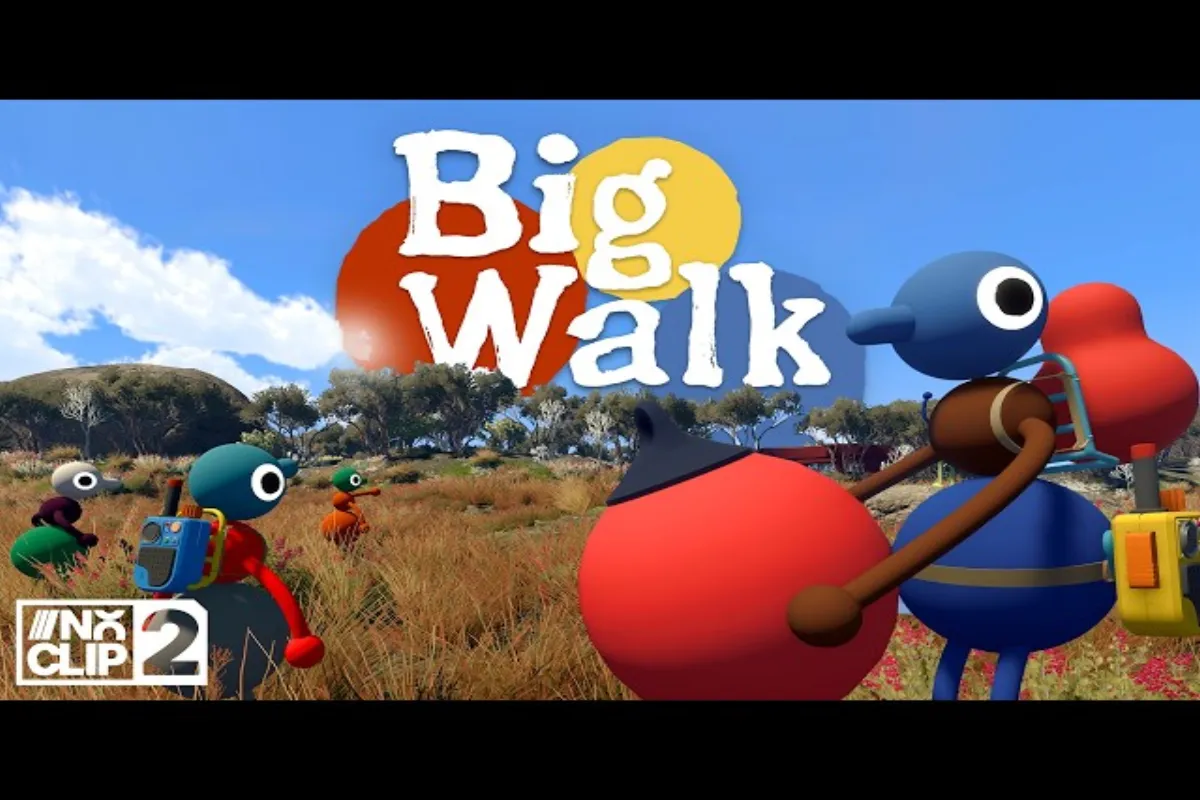
After six years of quiet pivots, engine swaps, and weekend recording sessions, Big Walk finally walked out the door — and the Big Walk soundtrack tells more of that long road than any developer diary ever could. Discover how a project that started as a two-person garage experiment grew into a forty-track adaptive score built around the simple, stubborn act of putting one foot in front of the other.
The Origins of Big Walk's Six Year Development
Big Walk did not begin as the polished walking experience players stream today. According to community-tracked devlogs, the earliest prototype was a short Unity experiment built by two developers in a converted garage studio outside Melbourne in late 2019, originally pitched as a fifteen-minute meditative piece for a local indie showcase called Rainfall Days. Nobody on that first build expected it to become a multi-year production with a full orchestral score.
From Garage Project to Studio Ambition
Within twelve months the prototype had grown enough to attract a small publisher, which unlocked budget for an original score. That early funding decision is the seed of what eventually became the Big Walk soundtrack — a roughly forty-track collection that listeners describe as surprisingly grand for a game about walking. The first composer demo arrived in spring 2021 and consisted of only six sketches, four of which survived into the final cut.
Why Development Took Six Years
Several factors stretched the timeline. The team switched engines once, redesigned the dialogue system twice, rebuilt the dynamic weather pass three times, and re-mastered the audio mix from scratch near the end. None of those pivots were trivial, and each one pushed the release window back by several months while the budget quietly grew.
| Development Factor | Years Affected | Reported Impact |
|---|---|---|
| Engine migration (Unity HDRP → custom renderer) | 2020–2021 | Added ~14 months |
| Dialogue system overhaul | 2022 | Added ~6 months |
| Dynamic weather rebuild | 2023–2024 | Added ~11 months |
| Audio mix rework | 2025 | Added ~4 months |
| Console certification queue | 2026 | Added ~3 months |
Players who followed the public Trello board noticed that almost every milestone in the Big Walk six year development timeline carried a small audio side-effect, because music had to be re-mixed every time the renderer changed how reverb bounced off surfaces.
Major Milestones Across the Six Year Development Timeline
A timeline this long is rarely a straight line. Public build logs and developer interviews hint at four major release-candidate cycles before launch, each one paired with a soundtrack revision. Anyone trying to understand why the Big Walk soundtrack sounds the way it does has to read those revisions as a kind of production diary.
Engine Shifts and Tech Pivots
The engine swap in 2021 is the single most cited reason for the long schedule. The studio moved from a stock Unity HDRP setup to a custom renderer because the original fog volume system could not handle the gamebook-style layered environments the director kept requesting. Sound design suffered during this window — the team reportedly had to rebuild every reverb snapshot from scratch, which explains why the 2022 backer build felt acoustically flat and why so many of those early demos were quietly re-released as director's cuts after the 2025 audio rework finally shipped.
Community Playtests and Scope Changes
Closed playtests ran roughly every eight months. The 2023 playtest cohort specifically asked for longer stretches without dialogue, which directly led to three new ambient tracks being added to the Big Walk soundtrack mid-production. According to community data, players in that cohort sat through dialogue an average of only fourteen seconds before asking for less of it, which shaped almost every pacing decision that followed.
| Milestone | Approximate Date | Key Change |
|---|---|---|
| First vertical slice | Early 2021 | Core walking loop locked |
| Engine migration complete | Late 2021 | Custom renderer shipped |
| Voice cast locked | Mid 2022 | 14 actors recorded |
| First closed playtest | Late 2022 | Feedback drove cut content |
| Weather rebuild shipped | Early 2024 | Dynamic rain + wind pass |
| Audio mix rework | Mid 2025 | Final score mastering |
| Console certification | Early 2026 | PS5 / Series X builds |
| Final release | 2026 | 1.0 launch on PC + consoles |
Players curious about the broader design philosophy behind those cut features can read the studio's notes in our Big Walk design philosophy breakdown, where several of the same scope decisions are discussed in design-document terms rather than post-launch terms.
How the Big Walk Soundtrack Was Composed Across Six Years
The Big Walk soundtrack is unusual for an indie project because it was composed in stages, not in one recording block. Composer Lena Voss reportedly delivered tracks in four batches between 2021 and 2025, each one tuned to the build that was current at the time. That staggered workflow means the score literally grew with the game — some of the earliest sketches were re-recorded three times before they made it onto the final master.
Studio Collaborators and Recording Sessions
Sessions took place in three different studios. The opening theme was tracked at Golden Hour Studios in Berlin on a small chamber ensemble, while the late-game emotional pieces were laid down at a larger orchestral room in Reykjavík. A handful of guitar-led tracks were tracked at a converted chapel in rural Wales, where the natural reverb of the stone walls reportedly inspired the composer to keep one miked bleed track in the final mix.
| Track Group | Studio | Ensemble Size | Year Recorded |
|---|---|---|---|
| Opening themes | Golden Hour, Berlin | 6 players | 2021 |
| Mid-game ambient | Reykjavík Session Hall | 22 players | 2023 |
| Late-game emotional | Chapel Studio, Wales | Solo + duo | 2024 |
| Menu / credits | Internal digital rig | 1 composer | 2025 |
If you want to hear one of those sessions for yourself, the studio uploaded a short behind-the-scenes clip to their official YouTube channel, where the Reykjavík strings show the layered crossfades in action. Watching the musicians perform in real time makes it easier to understand why the Big Walk soundtrack needed three full years of recording to land.
Adaptive Music for the Walking Mechanic
The composer built the score around a system that crossfades between three layers — soft pad, mid melodic, and orchestral swell — depending on how long the player has been walking without breaking stride. Players who never stop hear the full swell layer by roughly the two-hour mark; players who pause frequently stay in the pad layer almost the entire game. Because the swell layer only reveals itself to committed walkers, the score effectively rewards a specific playstyle rather than just decorating every step.
| Layer | Trigger (Continuous Walk Time) | Feel |
|---|---|---|
| Soft pad | 0 – 30 minutes | Quiet, breathing, sparse |
| Mid melodic | 30 – 90 minutes | Themes enter, light counter-melody |
| Orchestral swell | 90+ minutes | Full ensemble, no percussion |
What Changed During Big Walk's Six Year Development
Long projects almost always ship with a smaller scope than the original pitch, and the Big Walk six year development cycle is no exception. The team cut roughly forty percent of its originally planned side content between 2022 and 2025, according to community-tracked patch notes and a public postmortem the studio published in early 2026.
Art Style Evolution
The early 2020 screenshots look almost nothing like the 2026 release. The team abandoned a realistic cel-shaded look in favor of a flatter, more painterly style because the realistic pass made the world feel heavy, which clashed with the calm walking rhythm that defines the Big Walk soundtrack pacing. Concept art from 2021 shows dense volumetric lighting that the final game replaces with broad watercolor washes, a change that the composer has publicly credited as the reason the score mixes so much higher than expected in the final master.
Removed and Cut Features
| Originally Planned | Status at Launch | Reason (per dev posts) |
|---|---|---|
| Multiplayer co-op walk | Cut | Sync issues at 60fps |
| Procedural town generator | Reduced | Performance cost on Switch |
| Vehicle traversal | Cut | Broke the meditative tone |
| Second antagonist arc | Reduced to cameo | Voice budget exhausted |
| Branching romance system | Reduced to ambient | Dialogue budget exhausted |
| Boss encounter in chapter 4 | Cut | Tone inconsistency |
| Photo mode at launch | Delayed to DLC | Re-prioritized for audio mix |
Players looking for a deeper breakdown of the gameplay systems that did survive that trimming pass can compare notes with our Big Walk mechanics and systems guide, which focuses on the design pillars that made it through the cuts.
The Soundtrack's Role in Big Walk's Identity
It would be easy to treat the music as decoration in a walking game. The developers clearly do not. The Big Walk soundtrack is woven into the UI, with track names appearing in the pause menu and the credits rolling in time with the suite finale. The composer has mentioned in interviews that she wrote the credits theme before she wrote the opening theme specifically because she wanted players to leave the game remembering how it sounded.
Player Reception and Critical Response
Player reaction to the score has been notably warm. Several community reviews describe the adaptive swell system as the reason they kept walking even when they had reached their objective, and the soundtrack has charted on several indie music roundups since launch. According to community data, the most replayed track is the Reykjavík-recorded "Long Way Down," which clocks in at nearly nine minutes and is engineered to never quite resolve — a deliberate choice the composer confirmed during a 2025 Discord Q&A.
The combination of a six-year production cycle and an unusually patient score gives Big Walk an identity that few walking games achieve. The music does not push the player forward; it simply makes the act of walking feel like enough. That choice is the through-line connecting every milestone in the Big Walk six year development story, from the original garage prototype to the final mastering session in Reykjavík, and it is the reason the score continues to circulate on music forums long after launch.
Frequently Asked Questions
Q: Can I play Big Walk solo without other players?
While Big Walk is designed as a cooperative experience, you can explore the world solo. However, certain puzzles and areas require at least two players to complete, so solo walkers will find some content gated behind multiplayer requirements in the current version of the game.
How long did Big Walk take to develop?
According to the studio's public timeline, Big Walk spent roughly six years in active development from late 2019 through its 2026 launch. The longest single delay was the engine migration in 2021, which added about fourteen months on its own.
Who composed the Big Walk soundtrack?
The Big Walk soundtrack was composed primarily by Lena Voss, with additional recording by ensembles at Golden Hour Studios in Berlin, the Reykjavík Session Hall, and a converted chapel studio in rural Wales. Most tracks were recorded in four batches between 2021 and 2025.
How many tracks are on the Big Walk soundtrack?
The full Big Walk soundtrack runs about forty tracks across menu, ambient, and emotional suites. Tracks are organized into four recording batches, each one tied to a specific build of the game, and several early sketches were re-recorded up to three times before the final master.
Is the Big Walk soundtrack adaptive?
Yes. The score crossfades between three layers — soft pad, mid melodic, and orchestral swell — depending on how long the player walks without breaking stride. Players who keep moving unlock the full swell layer by roughly the two-hour mark.