
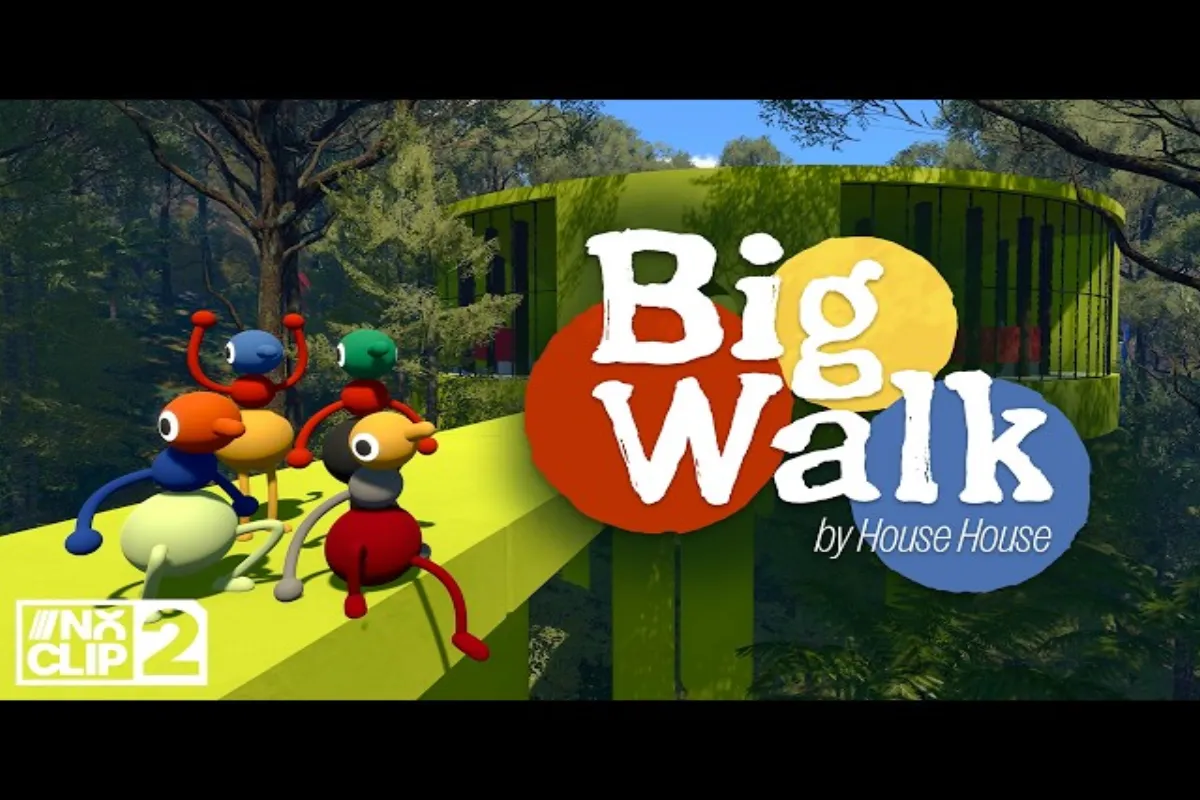
Big Walk Melbourne Studio: Who Is House House?
House House is a Melbourne-based indie studio founded in 2013 by four designers who first met while studying at the Swinburne University of Technology. The team earned worldwide recognition with Untitled Goose Game, which swept the 2019 D.I.C.E. Awards, took BAFTA's Game of the Year in 2020, and sold more than a million copies across every modern platform. That same spirit of mischievous, character-driven play carries forward into Big Walk, the Big Walk Melbourne studio's second major release after a six-year development cycle.
Based in the inner suburb of Brunswick, the studio operates as a tight-knit team of roughly fifteen people who rotate between programming, design, audio, and production roles. According to the GamesIndustry.biz profile on House House, the team embraces a directional creative approach in which one person proposes a core idea and the group spends weeks exploring every playful permutation before locking mechanics in place.
| House House Title | Release | Genre | Platforms |
|---|---|---|---|
| Push Me Pull You | 2016 | Local co-op party | PC, PS4 |
| Untitled Goose Game | 2019 | Stealth comedy | PC, PS4, Xbox, Switch |
| Big Walk | 2026 | Co-op wilderness adventure | PC, Mac, PS5, Switch 2 |
The Big Walk Melbourne studio also publishes under the publishing banner Panic, the same Portland-based publisher that previously released Untitled Goose Game and Untitled Goose Game's two-part follow-up. That continuity gave House House unusual freedom to spend six years iterating without external milestone pressure, which shaped the handcrafted tone that defines the final product.
The Big Walk Soundtrack: A Diegetic Audio World
The Big Walk soundtrack takes an unusual approach that sets it apart from almost every other co-op game on the market. Rather than layering a continuous score over the action, composer Sam Gill and collaborators AKSFX and Luke Neher built what the studio calls a diegetic music system, where every track originates from a physical source inside the world. Walk past a guitar leaned against a gum tree and it plays softly. Crank a hand-wound radio at a campsite and the bush comes alive with a different song. Sit beside a creek and a hidden harmonica might pick up the local melody.
This design choice directly shapes how players cooperate, because the music exists only where it is played. Walking away from a station silences it for everyone in the session, which forces co-op groups to make shared decisions about whether to stay and listen or keep hiking. According to the official Big Walk presskit, sound designer Em Halberstadt mapped more than forty ambient music locations across the Wilsons Promontory-inspired open world, each tied to a specific instrument and player interaction.
Why Diegetic Audio Changes Co-op Play
Diegetic audio transforms ordinary co-op communication into something far more intimate than voice chat ever could. Players must physically gather around a music source to enjoy a shared melody, which encourages the slow, conversational pacing that defines the rest of the game. Early playtesters reported in community threads that the Big Walk soundtrack became a soft anchor during long bush walks, helping groups sync up after splitting off to explore.
Soundtrack Composition Style
The trio of composers describe their work as field recordings blended with folk-leaning instrumental layers. Acoustic guitars, harmonicas, brushed snares, and ambient bush noise form the backbone, and the music swells naturally with weather changes. The result feels less like a conventional game score and more like a portable mixtape stitched into the landscape.
| Composer | Role | Signature Element |
|---|---|---|
| AKSFX | Lead composition | Lo-fi guitar loops |
| Sam Gill | Ambient textures | Bushland field recordings |
| Luke Neher | Harmonica and melody | Acoustic folk motifs |
| Em Halberstadt | Sound design | Diegetic placement and mixing |
How Big Walk's Melbourne Studio Shaped the Game World
House House drew heavily on its own surroundings to build Big Walk's sprawling national-park map. The team's home base in Brunswick, Victoria sits roughly two hours from Wilsons Promontory, the southernmost mainland point of Australia and a UNESCO-listed biosphere reserve. Multiple team members grew up hiking the Prom's granite trails, and that lived experience bleeds into the game's flora, weathered rock formations, and tidal coves.
The Melbourne studio also leaned into the city's broader indie scene for collaboration. Sound work was mixed at local audio houses, motion-capture sessions used Melbourne actors, and several environmental textures came from reference shoots at the Royal Botanic Gardens Victoria and the Dandenong Ranges. The result is a game world that feels unmistakably Australian rather than a generic forest backdrop.
Local Landscape as Gameplay Vocabulary
Every region of Big Walk carries environmental storytelling drawn from real-life Melbourne-area hiking culture. Tidal pools hide puzzles that only open during low-tide windows, a mechanic directly inspired by the actual tidal patterns at Norman Beach. Hidden trails reward players who notice subtle signage left by previous hikers, much like the marker posts scattered across Australian national parks. Even the in-game weather cycles are calibrated to match Melbourne's famous "four seasons in one day" temperament.
Community Roots and Crowdsourced Detail
House House ran multiple closed betas with Australian playtesters between 2024 and 2025, gathering feedback on everything from trail signage clarity to the realism of lyrebird calls. According to community reports, hundreds of suggestions were folded into the final game, including the now-iconic mechanic where leaving a billy kettle on the fire gradually attracts other players toward the camp.
For broader context on how House House evolved from a student project into a BAFTA-winning studio, see our House House history overview.
House House's Six-Year Creative Process and Collaborators
Big Walk began in 2020 as a small prototype inside the Big Walk Melbourne studio, then expanded into full production once the team secured funding from publisher Panic. Over six years the project cycled through multiple prototypes, including an early single-player version and a tabletop-style co-op mode, before settling on the current 2-12 player wilderness adventure design released on August 4, 2026.
The Melbourne studio credits roughly forty contributors in the final game, including external programmers, audio specialists, and voice performers. According to community interviews, the team deliberately kept its headcount small to preserve the handcrafted feel that defined Untitled Goose Game. House House co-founder Jake Straley has described the six-year timeline as the right amount of time to figure out what kind of game this actually wanted to be, while co-founder Struan Robertson noted that the Melbourne studio took a deliberate step back from commercial pressure after the goose's runaway success.
Key Development Milestones
| Year | Milestone |
|---|---|
| 2020 | Concept prototype begins |
| 2021 | Publisher deal with Panic signed |
| 2022 | Multiplayer co-op pivot |
| 2023 | Big Walk soundtrack and diegetic audio pass |
| 2024 | Wilsons Promontory field research |
| 2025 | Closed beta with Australian players |
| 2026 | Global launch on August 4 |
Tools, Tech, and External Partners
House House built Big Walk on a custom engine layered on top of Unity, with a bespoke audio plugin that handles diegetic placement in real time. External partners include the City of Melbourne for early location scouting, Melbourne Polytechnic for student collaboration on prop design, and a small team of local audio engineers who helped mix the Big Walk soundtrack across Dolby Atmos and stereo deliverables.
Big Walk Soundtrack Credits and Where to Listen
The Big Walk soundtrack credits list AKSFX, Sam Gill, and Luke Neher as primary composers, with Em Halberstadt handling diegetic placement and overall sound design. The full tracklist spans more than fifty individual stems, each tied to a specific location or instrument in the game world, plus a handful of layered ambience beds that respond to time of day and weather.
Players who want to enjoy the music outside the game can stream select tracks through the official presskit, where the studio has published a curated listening order that mirrors the in-game walking route from north to south. Vinyl and cassette editions are reportedly planned for late 2026, according to community reports on the House House Discord, although Panic has not yet announced an official release window.
Recommended Listening Order for First-Time Players
-
Start at Tidal Inlet for soft guitars and lapping waves
-
Move inland to Fern Gully for harmonicas and rustling leaves
-
Climb toward Granite Saddle for slow ambient drone builds
-
Descend to Campfire Clearing for the full ensemble finale
Where the Soundtrack Lives in the Game
Rather than appearing in a separate audio menu, the Big Walk soundtrack is fully integrated into exploration. There is no main theme that plays over the title screen, which is an intentional choice by the Melbourne studio to keep the experience grounded. According to community discussion threads, the lack of a non-diegetic main theme was the most controversial design decision in early betas, although most players came around once they realized how much the silence encouraged conversation during co-op sessions.
For a deeper look at how House House's design philosophy evolved across the full six-year development cycle, check our Big Walk development story breakdown.
Frequently Asked Questions
Q: Can I play Big Walk solo without other players?
While Big Walk is designed as a cooperative experience, you can explore the world solo. However, certain puzzles and areas require at least two players to complete, so solo walkers will find some content gated behind multiplayer requirements in the current version of the game.
Where is the Big Walk Melbourne studio located?
The Big Walk Melbourne studio is located in Brunswick, an inner suburb of Melbourne, Victoria, in southeastern Australia. The team is roughly a two-hour drive from Wilsons Promontory, the national park that inspired Big Walk's bushland setting, which made location scouting for the game world relatively convenient for the Melbourne studio.
Who composed the Big Walk soundtrack?
The Big Walk soundtrack was composed by AKSFX, Sam Gill, and Luke Neher, with diegetic placement and sound design handled by Em Halberstadt. The trio built a diegetic music system where every track originates from a physical instrument inside the game world rather than being layered on top by a typical non-diegetic score.
Can I listen to the Big Walk soundtrack outside the game?
Yes. Selected tracks are available through the official Big Walk presskit page, and physical editions such as vinyl and cassette are reportedly planned for late 2026 according to community reports on the House House Discord. The presskit listening order mirrors the in-game walking route from north to south.
How long did House House take to make Big Walk?
House House spent roughly six years developing Big Walk, beginning with an internal prototype in 2020 and culminating in a global launch on August 4, 2026. Publisher Panic joined the project in 2021 after the Big Walk Melbourne studio expanded scope beyond the original single-player concept into a 2-12 player co-op wilderness adventure.