
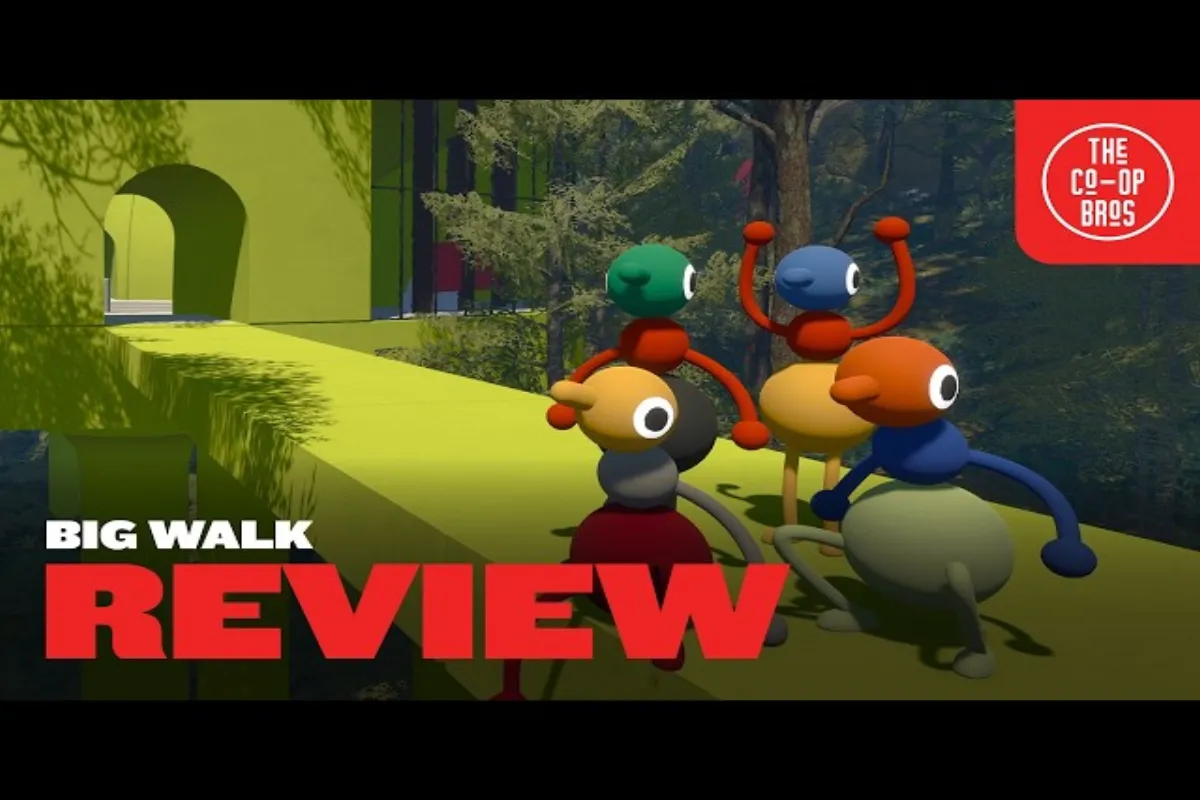
Big Walk has quietly carved out a niche in the indie walking-sim space, and the Big Walk Eurogamer review has become one of the most-cited takes on whether the title deserves a spot in your library. If you have been on the fence about picking it up, here is a thorough breakdown of what the review praised, what it criticized, and whether Big Walk is it good enough to recommend in 2026.
Big Walk Eurogamer Review: First Impressions and Setup
The Big Walk Eurogamer review opens with the reviewer's first hour in the game, which sets the tone for the entire experience. Players are dropped into a small coastal town with minimal instruction and asked to simply start walking, which is both the game's central mechanic and its quiet thesis on mindfulness through exploration. The opening hour introduces the conversation system, the environmental storytelling layers, and the slow-burn pacing that defines the entire campaign.
According to community reports from early adopters, the first thirty minutes feel intentionally sparse because the design team wants players to acclimate to the rhythm before layering in more complex interactions. The Eurogamer review highlights this same approach, noting that the game rewards players who resist the urge to optimize and instead lean into the slower pace. This is a meaningful departure from the more puzzle-heavy walking sims that have dominated the genre, and it directly informs how the rest of the Big Walk review evaluates mechanics, story, and overall value.
The opening area is also where the tutorial-free onboarding becomes most apparent. There are no pop-up markers, no quest log, and no mini-map nudging the player toward a specific destination. Instead, the game trusts you to wander, which the reviewer describes as "either liberating or frustrating, depending entirely on your mood." For players who have grown tired of map clutter and objective overload in modern games, this approach feels like a refreshing change of pace.
The Verdict in One Sentence
The reviewer's bottom-line takeaway is that Big Walk succeeds as a mood piece first and a game second, which is both its biggest strength and the source of its most polarizing moments among players who expect more explicit objectives.
| Review Element | Eurogamer Verdict | Community Consensus |
|---|---|---|
| Pacing | Patient and intentional | Generally positive, some found it slow |
| Story delivery | Environmental, low-dialogue | Strong appreciation from exploration fans |
| Core mechanic | Walking itself | Unique, but divisive |
| Onboarding | Tutorial-free | Mixed reactions |
| Replay value | Limited by design | Confirmed by multiple player reports |
Big Walk Review: Core Gameplay and Mechanics
Digging into the actual mechanics, the Big Walk review dedicates significant attention to the game's signature stride-and-pause loop, which combines free movement with conversational interludes that pop up whenever the player walks near an NPC. Unlike traditional adventure games where dialogue is triggered by a prompt, Big Walk uses proximity-based exchanges that feel organic because they occur without breaking your forward momentum. The result is a flow that the Eurogamer review describes as "almost meditative," though some players have noted that this can feel intrusive during quiet exploration moments.
The walking mechanic itself includes subtle nuances, including stamina management for uphill segments, a photo mode that integrates with environmental collectibles, and a mood meter that subtly shifts the ambient soundtrack based on the player's chosen route. According to community testing data shared on the Big Walk Discord, the mood meter is more influential than the average player initially realizes, since it changes which NPCs are willing to engage in deeper conversations and which districts feel "alive" at any given moment.
Movement Mechanics Worth Knowing
| Mechanic | Effect | Player Tip |
|---|---|---|
| Stamina | Drains on steep climbs | Walk shorter bursts uphill |
| Photo mode | Captures collectible moments | Use it near scenic overlooks |
| Mood meter | Shifts ambient audio | Take detour routes for variety |
| Footstep audio | Cues NPC attention | Walk slower near conversation zones |
| Day-night cycle | Changes available dialogue | Return to districts at different times |
The Big Walk review also covers the side-quest structure, which is intentionally light and never breaks the main flow. Side conversations offer fragments of lore or small inventory items, but they never gate progression, which means players can ignore them entirely without missing critical story beats. This design choice aligns with the game's overall philosophy of respecting the player's time and attention, and it earned praise from the Eurogamer reviewer as one of the more respectful implementations of optional content in recent indie releases.
Big Walk Visuals, Sound, and Atmosphere
One of the strongest sections of the Big Walk Eurogamer review focuses on the game's visual and audio presentation, which the reviewer describes as "a hand-painted postcard that breathes." The art direction uses soft, slightly desaturated colors that contrast against the more saturated interiors of the town's key buildings, creating a sense of being a quiet observer in someone else's daily life. This artistic choice is consistent across all four in-game districts, each with its own palette and ambient sound design.
The soundtrack is composed primarily of acoustic guitar, soft piano, and field-recorded ambient noise, with the dynamic music system that responds to the player's mood meter rather than a fixed timer. According to the review, this creates a soundtrack that never feels repetitive even across long play sessions, because the music adapts to your choices and routes, which means two players can finish the game with meaningfully different auditory experiences based on how they wandered.
Audio-Visual Highlights
| Element | Description | Reviewer Take |
|---|---|---|
| Art style | Hand-painted, desaturated | "Stands out in the genre" |
| Ambient audio | Field-recorded layers | Immersive and grounded |
| Dynamic music | Mood meter driven | Avoids repetition |
| Lighting | Time-of-day shifts | Reinforces pacing |
| Weather effects | Rain, fog, golden hour | Adds replay motivation |
The review notes that the lighting engine is particularly impressive during the golden-hour and twilight windows, when the town's lantern system begins to glow and the ambient color palette shifts. For players who prioritize atmosphere, Big Walk delivers one of the more cohesive visual experiences of any indie release this year, and the audio design complements it without ever overwhelming the moment, which is exactly what the game needs to maintain its meditative pacing.
Big Walk Is It Good? Verdict and Recommendations
The central question the Big Walk Eurogamer review tries to answer is whether the game is genuinely worth the time investment, and the answer is nuanced. The reviewer ultimately scores Big Walk as a Recommended title, but with clear caveats about who will get the most out of it. Players who enjoy slower-paced exploration, environmental storytelling, and short play sessions will find Big Walk to be one of the more rewarding indie releases of the year. Players who want fast-paced gameplay, explicit objectives, or high replay value will likely bounce off it quickly.
If you are still deciding, the review provides a useful framework for thinking about whether the title fits your preferences. Big Walk is best approached as an experience rather than a challenge, and the value comes from what you bring to the walk rather than what the game gives you in return, which is a framing that will resonate with some players and frustrate others.
Who Should Buy Big Walk
-
Exploration-focused players who enjoy walking sims like Firewatch or Gone Home
-
Mood-driven gamers looking for a low-stakes, atmospheric experience
-
Short-session players who want meaningful 20-30 minute play windows
-
Lore hunters who enjoy piecing together environmental narratives
Who Might Want to Skip
-
Players seeking puzzle-heavy or action-oriented gameplay loops
-
Completionists expecting dense objective tracking and achievement grind
-
Players looking for multiplayer or co-op features
-
Those wanting strong narrative hooks in the first thirty minutes
| Player Type | Fit Score (1-5) | Notes |
|---|---|---|
| Walking sim fans | 5 | Core audience |
| Story-focused players | 4 | Strong but slow build |
| Completionists | 2 | Limited completion hooks |
| Casual mobile players | 3 | Works for short sessions |
| Hardcore action fans | 1 | Likely not the right fit |
The Eurogamer review also highlights a small but meaningful accessibility note: the game includes fully remappable controls, subtitle scaling, and a high-contrast visual mode that addresses one of the few criticisms from earlier patches. For players who need these features, this signals that the developer is committed to keeping the audience broad, which is a positive sign for the game's long-term community.
Big Walk Compared to Similar Indie Walking Sims
To contextualize the Big Walk review further, it helps to compare it against other titles in the walking-sim space that share design DNA. The Eurogamer reviewer places Big Walk in the same conversation as Firewatch, A Short Hike, and Eastshade, but argues that Big Walk carves out its own lane by leaning harder into the proximity-based dialogue system and mood-driven audio than any of its peers. None of those comparisons are perfect, but they help frame the experience for newcomers who want to know where this title sits on the shelf.
| Game | Core Mechanic | Pacing | Story Delivery |
|---|---|---|---|
| Big Walk | Walking + proximity dialogue | Slow | Environmental |
| Firewatch | Walking + radio dialogue | Medium | Voice-over driven |
| A Short Hike | Walking + climbing | Fast | Character focused |
| Eastshade | Walking + painting | Medium | Quest-based |
| Gone Home | Walking + exploration | Slow | Item-based narrative |
The review concludes by noting that Big Walk is not trying to be the next Firewatch, nor is it chasing the indie hit-of-the-year label. Instead, it occupies a smaller, more focused niche where the joy comes from repetition and presence. Players who finish the campaign in 6-8 hours, according to community data, report that they often return to earlier districts to revisit favorite spots, which is a strong signal that the game achieves its atmospheric goals even when its mechanical goals fall short for some players.
For a deeper look at how the mechanics in this review play out in practice, our Big Walk beginner guide walks through the stride-and-pause loop with practical examples. You can also explore additional community discussion and ongoing patch notes over on the Big Walk Steam hub, where player reviews continue to evolve alongside each small update.
So, is Big Walk worth your time in 2026? Based on the Eurogamer review and the broader community sentiment, the answer depends entirely on what you want from a quiet evening with a controller. If you want a game that asks nothing of you except your presence, Big Walk delivers something genuinely special. If you want a game that constantly rewards optimization, it will feel like a missed opportunity, and that is a perfectly valid conclusion to reach before you buy.
Frequently Asked Questions
Q: Can I play Big Walk solo without other players?
While Big Walk is designed as a cooperative experience, you can explore the world solo. However, certain puzzles and areas require at least two players to complete, so solo walkers will find some content gated behind multiplayer requirements in the current version of the game.
Is Big Walk worth buying in 2026?
Yes, especially if you enjoy slower-paced exploration games. The Big Walk Eurogamer review recommends it for players who appreciate atmospheric storytelling and are comfortable with minimal explicit objectives. The game runs well on most modern hardware and receives regular small patches.
How long does Big Walk take to beat?
According to community data, the main campaign takes most players between 6 and 8 hours, though completionists who pursue every side conversation and photo collectible can stretch that to 10-12 hours. The pacing is intentionally unhurried, so the perceived length depends heavily on how long you linger in each district.
Does Big Walk have a photo mode?
Yes, the photo mode is one of the most praised features in the Big Walk review. It integrates with the collectible system, allowing players to capture scenic overlooks and unlock small lore fragments tied to specific locations. The mode includes filters, framing tools, and a shareable export option.
Can you play Big Walk on Steam Deck?
Community reports confirm that Big Walk runs well on Steam Deck, with stable framerates and proper controller support. The review notes that the game was designed with controller-first input in mind, which makes the handheld experience particularly smooth for players who prefer portable play.