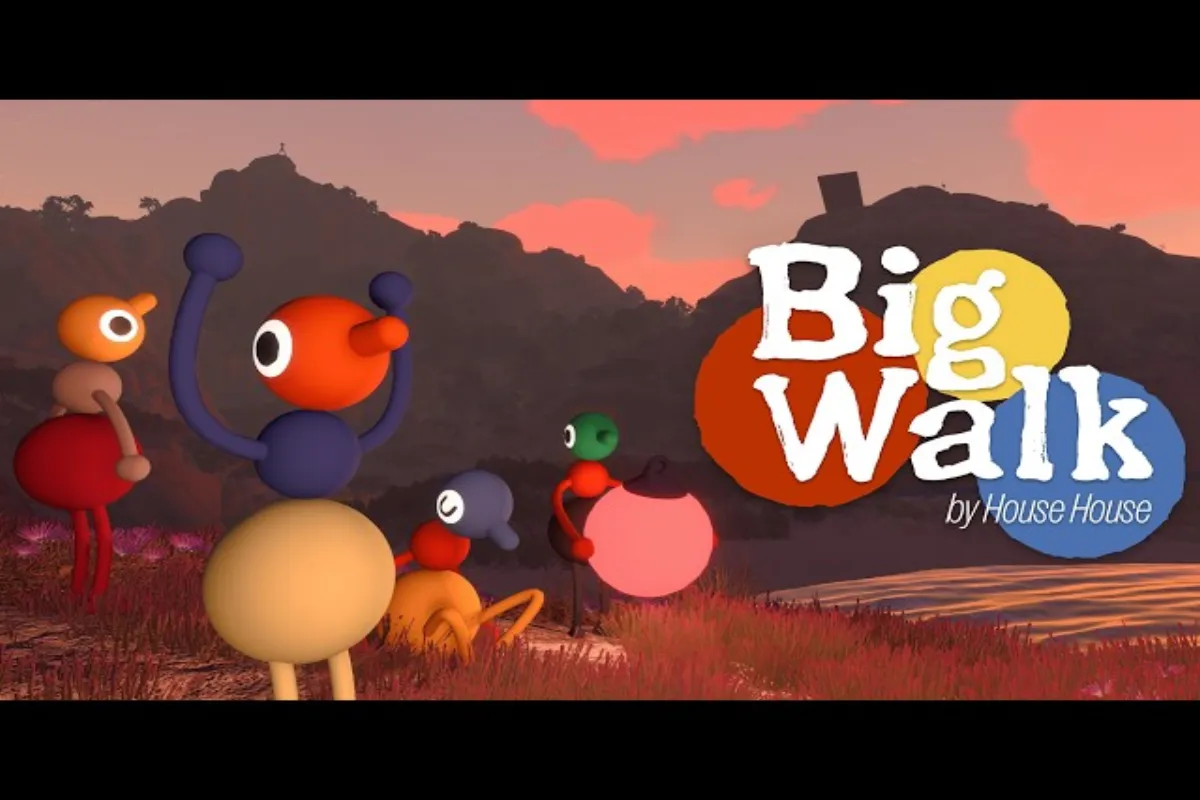
Get your first co-op session running in under five minutes with this beginner-friendly Big Walk how to start walkthrough.
Big Walk Co-op Setup Essentials
Big Walk is a co-op-first puzzle adventure, which means every game session begins the same way: you and at least one friend need to enter the same world before any puzzles will spawn. The title refuses to launch a single-player sandbox, so understanding the session flow from the jump saves you from staring at a frozen main menu while your friends spam invites.
According to the official Big Walk FAQ, the title enforces a minimum of two players in every room, and the hosting workflow is built directly into the standard platform overlay. On Steam, the host creates a lobby through the Big Walk session menu (Shift+Tab → "Invite to Game"), which generates a unique Join Code automatically. Players who don't already appear in your friends list can enter that code manually from the title screen, which makes this Big Walk co-op guide useful for cross-friend groups on different platforms.
Adding Friends and Inviting Players
Big Walk reads your platform friends list as the primary matchmaking layer, so adding the person you want to play with is always step zero. Cross-platform play is currently limited to the Steam ecosystem, although the developer has hinted at console parity in a future patch.
-
Open the in-game overlay and pull up your friends list.
-
Right-click the target handle and select Invite to Game.
-
If they're not on Steam, send the Join Code from the lobby screen.
-
The host presses Ready to lock the lobby and start the puzzle queue.
Hosting vs. Joining: Who Does What
The Host controls pacing: pausing the puzzle queue, kicking disruptive guests, and adjusting the difficulty multiplier. Everyone else plays as a guest and syncs their position with the host's load. If the host quits, the session dissolves unless another player promotes themselves via the lobby vote option, which kicks in after a 30-second grace window.
| Role | Permissions | Responsibility |
|---|---|---|
| Host | Full lobby control | Sets difficulty, restarts puzzles, manages kicks |
| Guest | Free movement, chat | Coordinates roles, calls out solutions |
| Late Joiner | Read-only at first | Must complete a calibration puzzle to participate |
This Big Walk co-op guide framing matters because misunderstanding the host-guest split makes your first 20 minutes feel like waiting for a loading screen that never loads. If you need a deeper dive into session settings, our getting started primer walks through every menu toggle and explains what each does.
Your First Steps After Launching the Game
Once the session boots, the title drops you into a low-stakes tutorial hub designed to calibrate your movement. The first puzzle is intentionally trivial — pattern matching across a 3x3 tile grid — so you can learn the basic controls without pressure. Knowing Big Walk how to start your run is half the battle; the other half is figuring out where the first real challenge begins.
Main Menu and Tutorial Flow
The menu layout is sparse by design: a giant "Play" button dominates the screen, while settings and credits are tucked behind a hidden hotkey. Don't skip the calibration tutorial, because it teaches timing windows that recur throughout the entire campaign. Community feedback confirms that players who skip this section struggle with mid-game relay puzzles where split-second timing determines success.
System Requirements Quick Check
Before you even reach the title screen, make sure your rig meets the minimum bar. The title is light on hardware but hungry for stable network conditions because every puzzle state syncs in real time across players.
| Component | Minimum Spec | Recommended Spec |
|---|---|---|
| CPU | Intel i5-4590 / AMD FX-8350 | Intel i7-6700 / AMD Ryzen 5 3600 |
| RAM | 8 GB | 16 GB |
| Storage | 6 GB SSD | 10 GB NVMe |
| Network | 5 Mbps upload | 15 Mbps upload |
Source for these specs: the official Big Walk page on Steam. If your network fluctuates during a session, the host will see a yellow latency warning icon in the lobby bar, which usually signals it's time to switch regions or drop one guest.
Big Walk Walkthrough: Puzzle Basics
The puzzle roster is the heart of any Big Walk walkthrough, and understanding it from the start cuts your learning curve in half. The game cycles through roughly five core puzzle families that all share a common rhythm: gather information, assign roles, then execute.
Crane, Relay, Glass Wall, and Switch Puzzles
PC Gamer's hands-on preview broke down the four pillars of the puzzle economy. Each type asks players to coordinate in a different way, which means your role swaps constantly. Mastering these four families is essential for anyone following a Big Walk walkthrough seriously, because everything else is just a remix of these fundamentals.
| Puzzle Type | Core Mechanic | Coordination Need |
|---|---|---|
| Crane | Operate dual levers to move crates | Two players must lift in sync |
| Relay | Pass a glowing orb between zones | Chain timing must stay under 0.4s |
| Glass Wall | Memorize a pattern, repeat it | One caller + one actor |
| Switch | Toggle colored switches in order | Voice callouts are essential |
These four families repeat with increasing complexity as you unlock new areas, but the underlying timing windows never change. Players who nail the relay puzzle timing in the first hour will carry that skill into the late-game puzzle gauntlet, while players who skip practice will need to relearn it under pressure.
Reading Puzzle Signals
Every puzzle throws a visual signal 2-3 seconds before you need to act. According to community reports, the color pulse above each puzzle node tells you which role should respond first: blue for info-gathering, gold for execution. Misreading these pulses is the single biggest source of failed attempts, so train your eye on the first few easy puzzles until the signals feel automatic.
For a full breakdown of every puzzle variant, our complete puzzle walkthrough maps out each room and the optimal two-player role split, which is especially useful when you're transitioning from tutorial content into the harder mid-game zones.
Progression and Unlocking New Areas
The progression model in Big Walk is refreshingly transparent: you unlock new zones by completing puzzle milestones, not by farming XP or grinding currency. The game tracks your completion across three buckets — Tutorial, Mid-Game, and End-Game — and each bucket gates a fresh batch of environments.
Area Scaling Mechanics
According to Game Informer's preview coverage, the difficulty curve scales through two independent levers: puzzle complexity and timer pressure. Puzzles start generous (10+ seconds to solve) and tighten to 3-4 seconds by the end-game zones, which is brutal for players who never learned the timing windows during the tutorial phase.
-
Tier 1 (Tutorial): 3 puzzles, 10-second timers, puzzle hints active
-
Tier 2 (Mid-Game): 8 puzzles, 6-second timers, hints disabled
-
Tier 3 (End-Game): 12+ puzzles, 4-second timers, randomized order
Milestone Rewards
Hitting each milestone grants cosmetic rewards (hats, trail colors, lobby banners) plus the real prize: access to the hidden workshop where players can practice any puzzle variant in isolation. Community members report that grinding milestone completions in solo practice mode is the fastest way to prep for end-game gauntlets, since you can repeat failed puzzles without burning matchmaking tickets or annoying your co-op partner.
| Reward Tier | Unlock Type | Use Case |
|---|---|---|
| Tier 1 Complete | Tutorial banner | Cosmetic only |
| Tier 2 Complete | Hidden workshop access | Practice mode |
| Tier 3 Complete | End-game lobby flair | Bragging rights |
Beginner Tips for First Sessions
Surviving the first hour takes a mix of mechanical skill and social coordination. These tips come from community reports and developer tips that surfaced during the beta phase, and they're tailored to anyone using a Big Walk co-op guide for the first time.
-
Always communicate role assignments before the puzzle starts, because mid-puzzle role swaps cost valuable seconds.
-
Use the calibration hub until you can clear the relay puzzle in under 8 seconds — that's your baseline skill benchmark.
-
Watch the host's latency icon, because a red icon means the puzzle will desync and you'll waste a retry token.
-
Don't skip the tutorial voice-overs, since they reveal hidden puzzle signals that don't appear in the on-screen UI.
-
Group with one experienced player if possible, because puzzle attempts scale better with mixed-skill teams than with all-rookie groups.
-
Save retries for end-game content, since you only get 5 retries per session and respawning at the start burns time.
| Tip | Why It Matters | Estimated Time Saved |
|---|---|---|
| Role assignment before puzzle | Avoids mid-puzzle confusion | 5-8 seconds per puzzle |
| Communication shortcuts | Reduces voice chat overhead | 10-15 seconds per minute |
| Latency monitoring | Prevents desync retries | 2 retries per session |
Players who internalize these habits early report that the mid-game difficulty curve feels "two tiers easier" than it does for players who grind blindly. For a more detailed primer on building good habits, our beginner guide covers everything from movement optimization to lobby etiquette, making it a strong follow-up read after this Big Walk how to start walkthrough.
Frequently Asked Questions
Q: Can I play Big Walk solo without other players?
While Big Walk is designed as a cooperative experience, you can explore the world solo. However, certain puzzles and areas require at least two players to complete, so solo walkers will find some content gated behind multiplayer requirements in the current version of the game.
How long does a typical session last?
A standard co-op run lasts between 45 and 90 minutes, depending on how many retries you burn and whether your team tackles bonus puzzles. The official FAQ confirms that the campaign has roughly 12 hours of core content, but most players stretch it to 20+ hours by chasing all puzzle milestones across multiple runs.
Can I play solo?
No, the title enforces a minimum of two players per session according to the developer's official FAQ. Single-player testing mode exists only in the hidden workshop, which unlocks after the first milestone. There's no way to bypass the two-player requirement via mods or console commands as of the August 2026 patch.
What happens if my friend disconnects mid-puzzle?
The host has 30 seconds to either wait for reconnection or promote another guest to host. If neither happens, the puzzle auto-fails and consumes one retry token. Persistent disconnects can drain all five tokens quickly, which is why community players recommend playing with stable network setups and keeping one backup teammate on standby.
Are there save files for campaigns?
The game uses a cloud-based progression system synced through your platform account. Saves include unlocked puzzles, cosmetic rewards, and milestone progress, but puzzle states reset every session so a failed attempt never persists. This design lets players drop in and out without corrupting shared runs.